Stirring the Soul of Matter: Composer Chang Chun-Yen’s Musical Dialogue with Muro Box at Taiwan's National Concert Hall

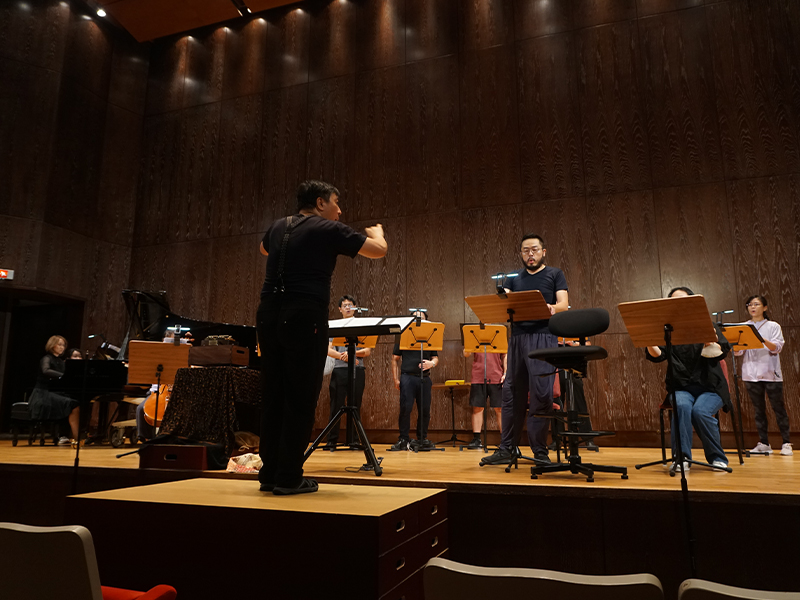
Taiwanese composer Chun-Yen Chang at the National Concert Hall, Taiwan. He is conducting intently, with a Muro Box-N40 Sublime smart music box placed in front of him, and a professional vocal chamber ensemble (Mysterium Musicum) during a rehearsal recording before a joint performance.

Stirring the Soul of Matter: Composer Chang Chun-Yen’s Musical Dialogue with Muro Box at Taiwan's National Concert Hall

For most people, the image of a music box is limited to the memory of a childhood carousel or a small ornament on a desktop. But what if you were told that a programmable smart music box is not merely a decoration—it can share the stage with a professional vocal chamber ensemble, performing a profound musical piece exploring nuclear physics, time, and the sacred under the solemn lights of the National Concert Hall in Taipei? How would that reshape your perception of this “programmable music box instrument” (Programmable Music Box)?

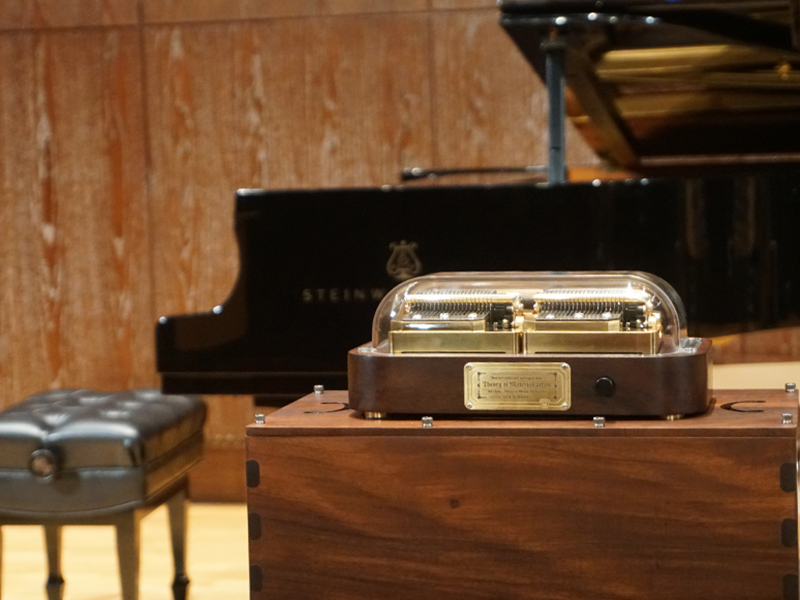
On-site documentation of concert preparation at the National Concert Hall: a Steinway piano stands in the background, with a Muro Box-N40 Sublime programmable music box and its acacia wood resonance box in the foreground.

I. The Seeker between Ancient and Modern: Chun-Yen Chang and the Intimacy of Music

Chun-Yen Chang, a composer who regards music as both prayer and companionship, founded “Mysterium Musicum” (a sacred vocal chamber ensemble) in 2010. Since then, he has focused on centuries-old sacred music traditions, including medieval plainchant and Renaissance polyphony. The ensemble’s members come from diverse professional backgrounds, joining together to serve the community through music, forming a cross-disciplinary sonic community. This extreme attentiveness to sound quality is precisely what drew him to Muro Box.

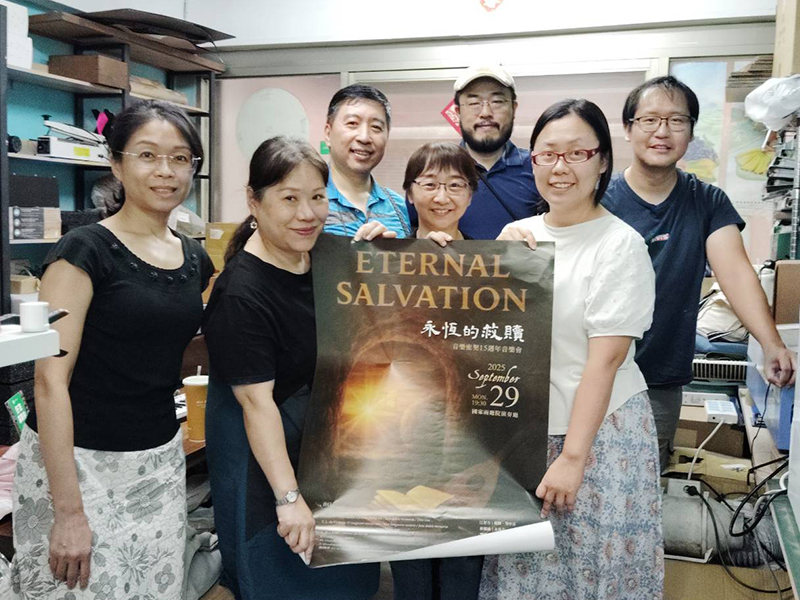
Taiwanese composer Chun-Yen Chang and core members of the professional vocal ensemble Mysterium Musicum (Mysterium Musicum Vocal Ensemble) visited the Muro Box office to discuss performance requirements. Before leaving, they took a commemorative photo with the promotional poster for their upcoming debut at the National Concert Hall in Taipei.

On September 4, 2025, Professor Chun-Yen Chang led core members of the Mysterium Musicum team to Muro Box’s office in New Taipei City, to discuss how their choir could integrate with live music box performance, anticipating a cross-disciplinary artistic fusion. After the meeting, Professor Chang wrote a reflection in English, documenting his and his team members’ insights from their visit to Muro Box’s office, in hopes of drawing attention from music professionals both in Taiwan and abroad to Muro Box—a music box made in Taiwan. See his post: https://www.facebook.com/share/p/1BLgs6FocU/

II. Deep Experiment: When a Composer Meets Precision Machinery

When Composer Chun-Yen Chang first encountered the Muro Box, his interest was not in playing typical pop music, but in its ability to precisely control each note and sustain the warmth of physical sound. Through repeated discussions with the team, he became fascinated by the physical vibrations produced when the music box plucks its metal note combs—a richness he believes cannot be replicated by digital signals. To him, the Muro Box is not merely a musical instrument; it is a precision instrument capable of executing complex music theory structures.

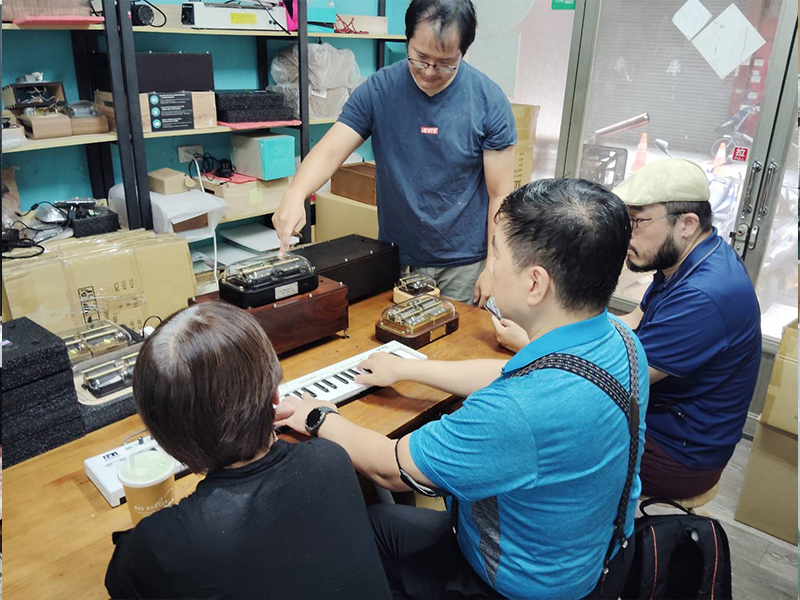
Composer and conductor Chun-Yen Chang, along with members of "Mysterium Musicum Vocal Chamber Ensemble," gather around a table, deeply focused on studying the Muro Box-N40 Sublime programmable music box. In the image, Composer Chang is personally playing a MIDI keyboard to control the smart music box's synchronized performance, carefully listening to the sound and response time to ensure it is sufficiently immediate. The ensemble members also observe the acoustic output of two N40 music box models, comparing the timbres of different versions.
This is not merely listening to music; it is a meticulous exploration of timbre. Chang and the ensemble delve into the acoustic characteristics of the N40 Standard and N40 Sublime models. Ultimately, they decide that the sound profile and appearance of the Muro Box-N40 Sublime are more suitable for the upcoming performance at the National Concert Hall in Taipei.

Rehearsal Process Before the Performance:

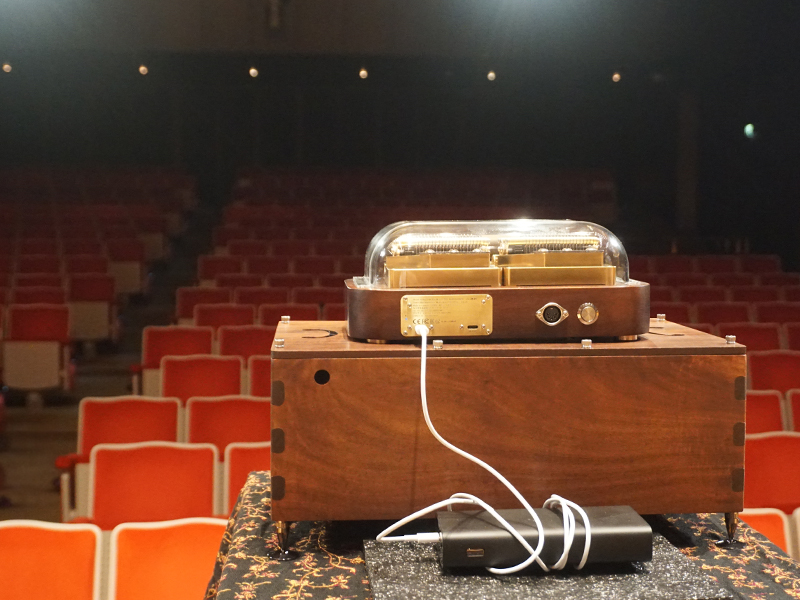
Close-up of the stage at the National Concert Hall before the performance. At the center of the frame is the programmable music box “Muro Box-N40 Sublime” placed on a wooden stand, with empty red audience seats in the background. The music box is ready, bathed in stage lighting, quietly awaiting the first note—capturing the serene moment before the evening's audience, the "Mysterium Musicum" Vocal Chamber Ensemble, and composer-conductor Chun-Yen Chang take the stage.
The stage at the National Concert Hall before the performance. The Muro Box-N40 Sublime programmable music box is ready, awaiting the first note to welcome the evening's audience.
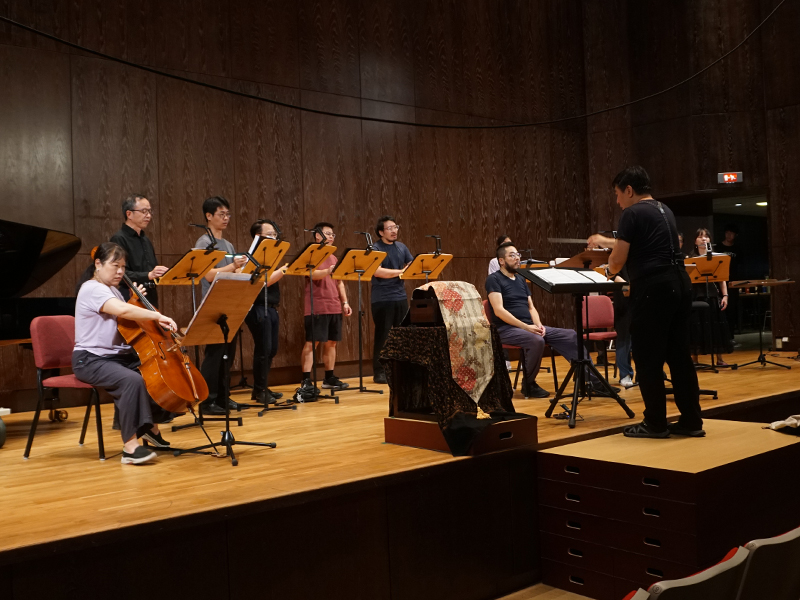
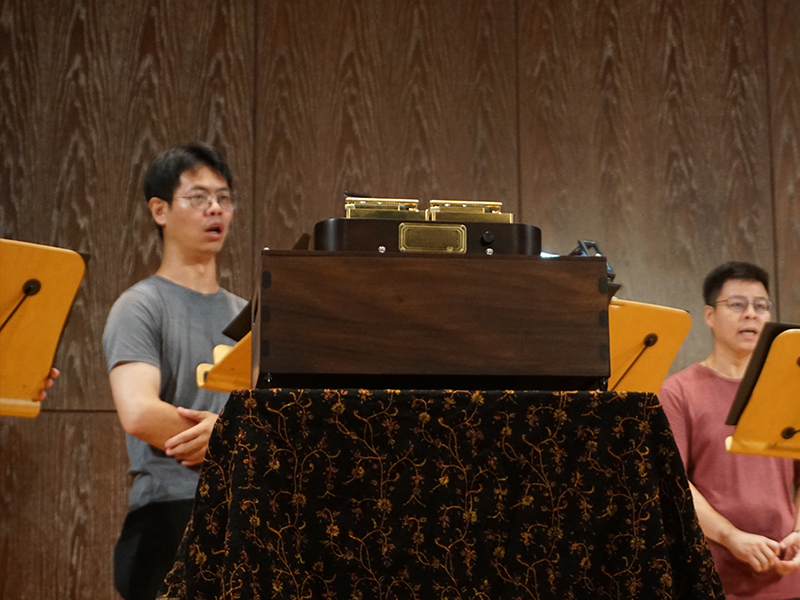
Backstage rehearsal at the National Concert Hall in Taipei before a performance: In the scene, the "Mysterium Musicum Vocal Chamber Ensemble" and musicians are preparing on stage, while a Muro Box-N40 Sublime programmable music box sits in front of the stage on its dedicated stand, covered with a cloth. This cloth is reserved for the moment near the end of the piece, when, in dim lighting and under the gaze of the entire audience, it will be lifted to reveal the music box producing its first sound—a surprise moment.
Composer Chang specially chose a piece of cloth with an exquisite pattern to cover the Muro Box-N40 Sublime programmable music box, which was slated to make its appearance only at the climactic finale, to prevent cameras and spotlights from capturing it too early and spoiling the surprise.

III. Creative Concept: A Dialogue between Theory of Materialization and the Music Box

Professor Chun-Yen Chang, regarding his upcoming performance at the National Concert Hall in Taiwan, shared his creative process of incorporating the Muro Box-N40 Sublime programmable music box into his composition:

“The song cycle ‘Theory of Materialization’ is ostensibly an allegory about nuclear physics, pointing directly to the fissures in contemporary thought and raising a question: In the modern knowledge system, can we still perceive the sacred within the material world? It invokes the sacredness of ‘creation’ in the Western theological and philosophical tradition—a worldview of being that contains order and weight. However, with the rise of modern material science and civilization, this essential sacredness was forcibly separated out, gradually marginalized and even dissolved in modern thought.”

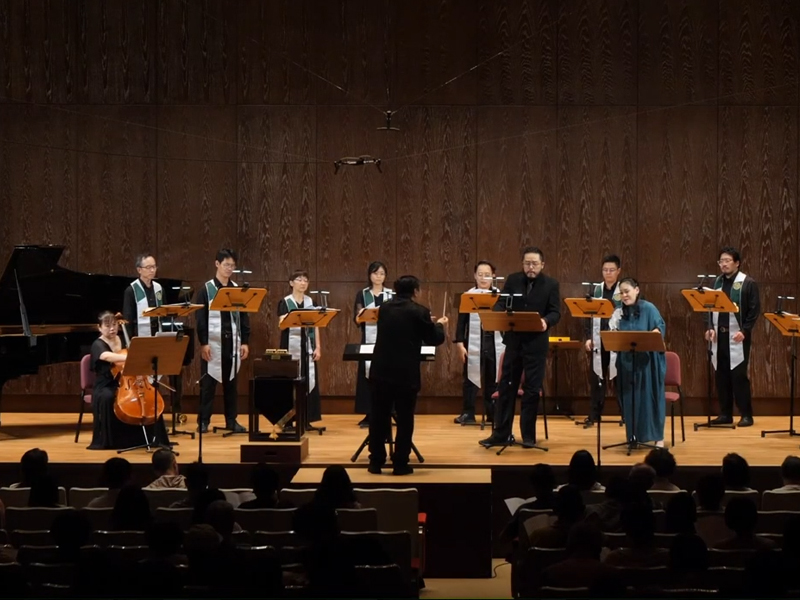
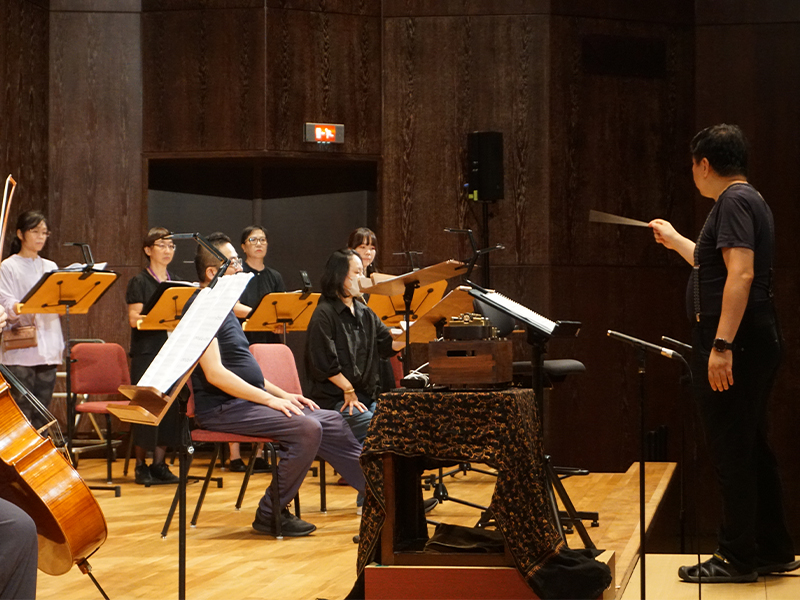
At the center of the stage of the National Concert Hall in Taipei, the 'Mysterium Musicum' ensemble and musicians have changed into formal performance attire and taken their positions. Composer and conductor Chun-Yen Chang stands at the center of the podium, only a step away from the Muro Box-N40 Sublime music box, allowing him to easily reach out and touch the front knob when needed to trigger the specified melody for the coda of a movement. The image also captures the black recording microphones suspended above the conductor's head, demonstrating the professional audio setup tailored to capture the vocalist's volume and the sound levels of various instruments on stage.
The Muro Box-N40 Sublime smart music box had its own dedicated performance stage during this program, only a step away from the conductor, so that when he needed to initiate a performance, he could easily reach out and touch the front knob of the music box to play the designated melody corresponding to the end of that movement. Note that the recording microphones are the black objects suspended above the conductor's head; this microphone distance is configured specifically for the vocalist's volume and the sound levels of all instruments on site.

Each movement of the work opens with Latin, a language that carries the dual historical weight of religion and science. The chorus seems to emerge from prophecies of lost scriptures, proclaiming a primal narrative that transcends history and systems of knowledge in a cold yet rhythmic manner. The solo vocal parts then unfold gently in Chinese, their voices embodying historical portraits—souls that have witnessed monumental technological transformations. These voices are not intended for storytelling but rather echo through history, articulating the silent vibrations that accompany material progress, and annotating with bodily memory the lost memories behind the brilliance.

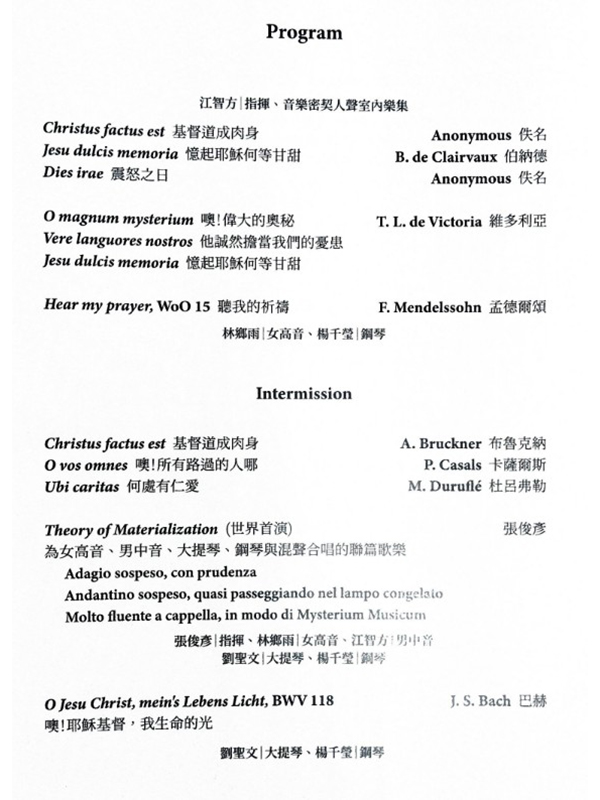
A printed record of the program booklet for a concert at the National Concert Hall in Taipei. The first half includes: Anon., Christus factus est (Christ Became Obedient) and Dies irae (Day of Wrath); Bernard of Clairvaux, Jesu dulcis memoria (Jesus, Sweet Memory); Victoria, O magnum mysterium (O Great Mystery) and Vere languores nostros (Surely He Bore Our Griefs); Mendelssohn, Hear my prayer, WoO 15 (performed by Lin Xiang-Yu, soprano; Yang Chian-Ying, piano). After intermission, the second half includes: Bruckner, Christus factus est (Christ Became Obedient); Casals, O vos omnes (O All You Who Pass By); Duruflé, Ubi caritas (Where Charity Is). This is followed by the world premiere of Theory of Materialization, a cycle opera for soprano, baritone, cello, piano, and mixed chorus, composed and conducted by Chang Chun-Yen. It comprises three movements: “Adagio sospeso, con prudenza,” “Andantino sospeso, quasi passeggiando nel lampo congelato,” and “Molto fluente a cappella, in modo di Mysterium Musicum.” The performance features Chang Chun-Yen conducting the Mysterium Musicum Vocal Chamber Ensemble, with soprano, Jiang Zhi-Fang (baritone), Liu Sheng-Wen (cello), Yang Chian-Ying (piano), and others. The closing work is Bach’s O Jesu Christ, mein’s Lebens Licht, BWV 118 (O Jesu Christ, My Light of Life), performed by Liu Sheng-Wen (cello), Yang Chian-Ying (piano), and soprano.

In the opening section of the piece, as the chorus and instruments unfold the sweeping advances in physics, the soprano voice emerges like an ancient invocation. This is not only a critique of institutional, social, and gender structures, but also a lament for science’s forgotten spirituality. In the final section, the Singularitas is no longer a mere scientific marvel, but an ultimate hymn that bursts forth once matter has been desacralized. It wields the power to distort time and space, revealing the ‘Law of Termination.’ The piece then concludes with a mysterious chant that leads toward an open ending, as if at the brink of the end of time, leaving only sound as the pure residue of existence.

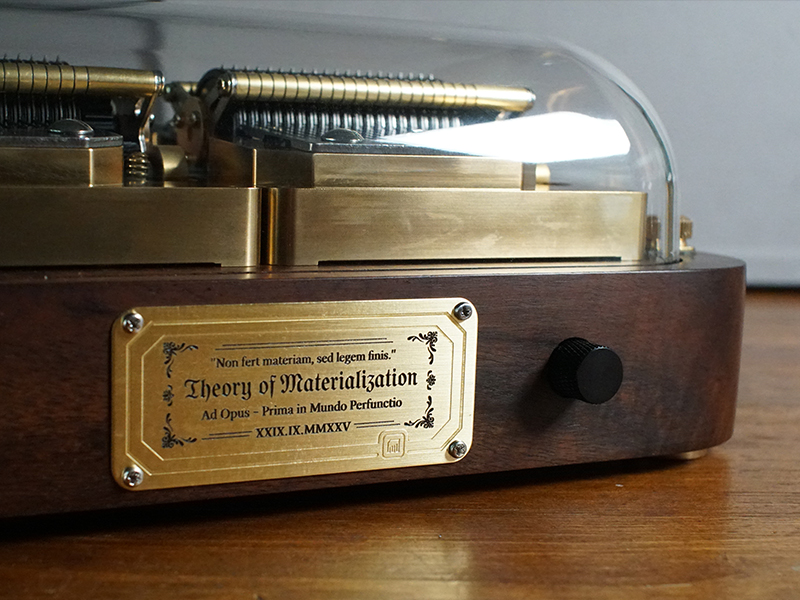
Close-up of the Muro Box N40 Sublime programmable music box, with a metal nameplate engraved with a Renaissance-style elegant decorative border and a Latin motto designed by composer and conductor Jun-Yan Zhang specifically for this performance. This exquisite laser-engraved nameplate records the ultimate fusion of technology and craftsmanship.
The above is a laser-engraved nameplate designed by Jun-Yan Zhang specifically for this performance. The Renaissance-style elegant decorative border and Latin motto make this Sublime version smart music box a uniquely exquisite collectible craft piece.

1. Latin motto:
“Non fert materiam, sed legem finis.”

  • English translation: “It does not carry matter, but the ultimate law.”
  • Explanation: This phrase carries profound philosophical implications, symbolizing that the essence of art lies in exploring the core laws and purposes of all things, rather than merely pursuing material forms.

2. English title:
Theory of Materialization

  • Explanation: The central proposition of this performance explores how humanity can reconnect with the forgotten “sacredness” within contemporary systems of knowledge.

3. Latin proclamation:
Ad Opus – Prima in Mundo Perfunctio

  • English translation: “To the great work — the world’s first performance in practice.”
  • Explanation: This commemorates the work as a precious milestone, being the world’s first realization of this concept, carrying exceptional significance for art collecting.

IV. Live Sound at the National Concert Hall

In this performance, the Muro Box N40 Sublime music box assumed the role of “material reverberation.” Its timbre—precise, repetitive, and weighted with metallic resonance—fills the gap between the human voice and the coldness of technology. In narrative passages where wavefronts collapse and density undergoes drastic shifts, the music box’s sound resonates in the air like an echo of history, annotating the lost memories behind the brilliance.

V. Conclusion: Reclaiming the Lost Sacredness and Poetic Spirit

In this AI era overflowing with language and imagery, Chun-Yen Chang reminds us through music: this work attempts to deeply interrogate the boundaries of what we know and what we have overlooked, by means of material phenomena and fractured historical fragments, accompanied by reverberation and silence. Perhaps only when matter is no longer seen merely as something to be used or discarded can we rediscover the meaning of existence itself.

Through this performance, we witnessed the potential of Muro Box as a professional musical instrument. For every collector, it is not just a music box, but a “sound companion” that can converse with you and evolve with your taste. Perhaps, in the plucking sound of Muro Box, you too will hear the poetry of your own life.
VI. Composer Introduction

Profile picture of composer and conductor Chun-yien Chang on Facebook, with his English name displayed.

Taiwan-based distinguished composer Chun-Yen Chang (張俊彥) is the first creator to treat the Muro Box N40 Sublime music box as a professional instrument. As the founder of “Mysterium Musicum” (Mysterious Music Human Voice Chamber Ensemble), Chang distinguishes himself in the contemporary music scene with profound philosophical thinking and abundant creative energy. His works such as “2002 Formosa Rhapsody” and “Song of Time” are not only internationally renowned but also frequently selected by European and American music festivals. Chang is not only dedicated to reviving ancient sacred music but also excels at transforming local culture into avant-garde sonic vocabulary, demonstrating the profound depth of a comprehensive artist.

In recent years, Chang has further extended his creative reach into the realm of human-machine computation. Through deep collaboration with the Natural Computation Laboratory at National Yang Ming Chiao Tung University, he reflects on how machines manifest a unique “autonomy” during the computational process. This pursuit of human-machine symbiosis aesthetics leads him to regard the Muro Box not as a passive playback device, but as a partner capable of organic resonance with the human voice. In his current cycle of vocal works “Theory of Materialization,” he defines the possibility of the music box as a “professional instrument” in an unprecedented way. Through deep reflection on the “essence of machine creation,” he allows the music box to demonstrate a soul that transcends mere decoration within the realm of contemporary art.

On September 29, 2025, the Muro Box N40 Sublime Smart Music Box performed for the first time at the National Concert Hall.